Doug Jones spent nearly 30 years in public safety on California's Central Coast, working alongside tactical units before moving into airport police work. These days, when he's not on shift, he's putting in 30 to 50 miles a week on trails, training for his next ultra, and building a coaching business around the same discipline that shaped his career.
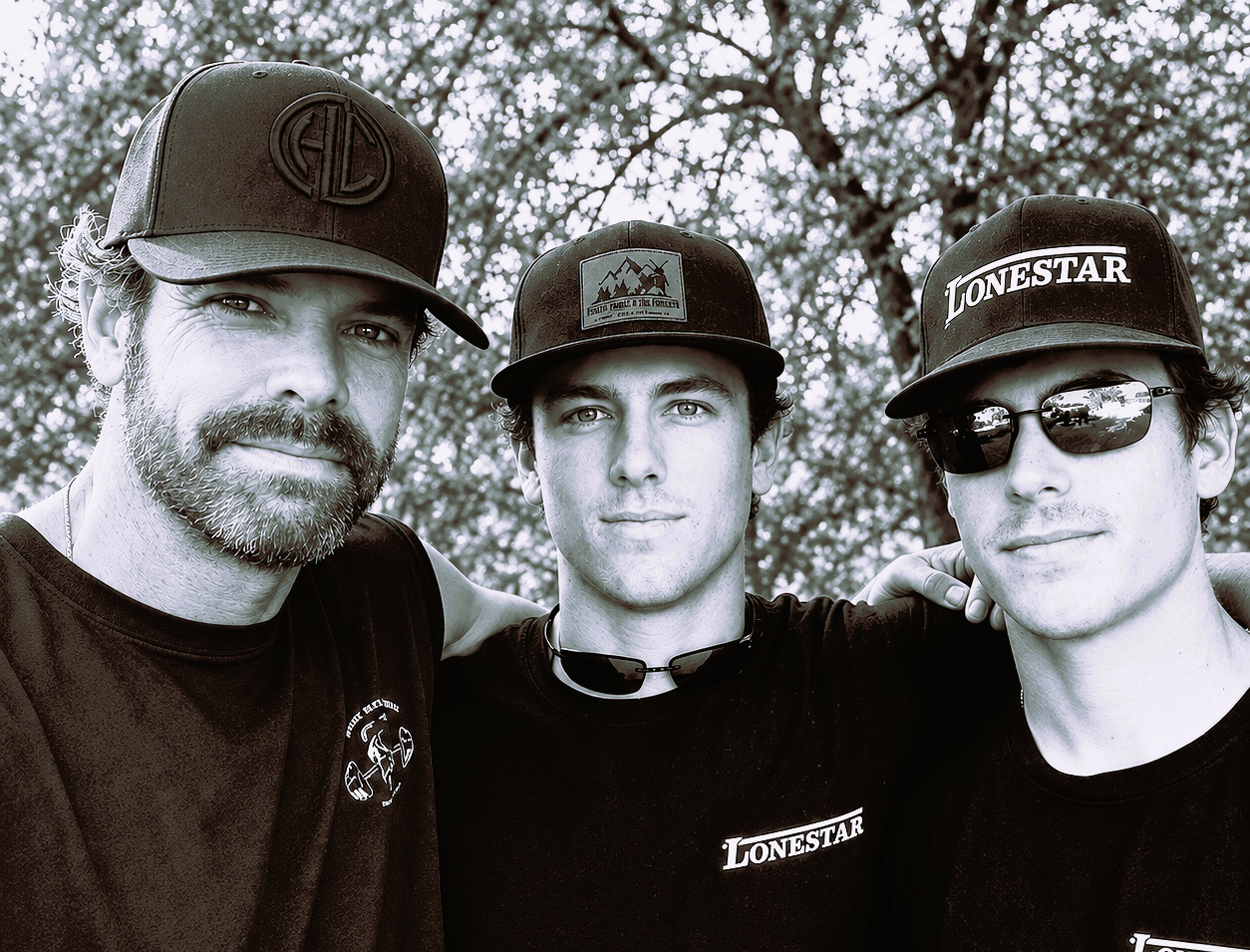
Ultra-runner Doug Jones (left) with his two boys.
This is the first part of an interview series with Tredict athletes and coaches all around the world.

Have a look at the second interview with Fabio Giudici from Como, a "Tredict powered athlete".
I asked Doug to tell me about himself, how he found Tredict, and why he decided to put his name behind it.
Tell us a bit about yourself and where running fits into your life.
"After retiring from a fast-paced law enforcement agency on the Central Coast of California, I now serve with an airport police department, a role that has given me more balance and the time to invest deeply in the things I am passionate about. Nearly 30 years in public safety, operating at high speeds within top tactical units, has left me with a sharp eye for what works and what does not.
Running is more than sport for me. It is a discipline I embrace and protect with reverence, one I take as seriously as I took the work that defined my career. I am an active ultra-runner and competitive shooter. I currently run 30 to 50 miles per week and have another race coming up in early October 2026. I am presently in the final push of my training phase for this race. I am also getting into mountain biking and exploring triathlons, so my footprint in the endurance space is growing."
How did you come across Tredict, and why has it stuck?
"Most platforms try to do too much or are built around a single gimmick. Tredict is different, and that has become clearer the more I have used it. I have been using the app since May 2026, and it is now a daily fixture in how I train, log, and plan. That is not something I say casually, I do not attach my name to anything I do not believe in."
What made you want to actually put your name behind Tredict, rather than just using it quietly?
"There are three reasons I am a genuine believer in what you have built:
AI and MCP Server Integration. The ability to create and push training plans directly to my calendar is already powerful. But using the MCP server integration to verbally record my training notes through Claude AI and push them seamlessly into Tredict is something I do after every single session. That workflow is a genuine game-changer, and it is something I speak about naturally because I live it.
Coaching Alignment. As I build Jones Performance Group, Tredict's coaching infrastructure is exactly what I need to manage, track, and develop my clients as I take on more. This is a planned component of my business strategy, not a secondary concern.
True Platform Independence. Tredict is not owned by a device manufacturer steering users into a closed ecosystem. That neutrality is rare in this space and it matters enormously to serious athletes and coaches who demand unbiased data."
You're also building Jones Performance Group. What's the plan there?
"I am building Jones Performance Group (JPG), a performance coaching business. Jones Performance Group provides performance coaching built around the individual client and based upon an established system of success delivered through an interactive application and personalized coaching experience. It is still in its early stages. Tredict's coaching and planning tools are not a side component of that model, they are a planned, integrated element of how I will manage and scale my clients as it grows."
Where do you see yourself heading in the next few years?
"2026 is about 50-mile races. 2027 is planned for 100-mile competitions. And the ultimate target, 2028, is Moab 240, Cocodona 250, and races of that magnitude. I set expectations, not goals. The trajectory is clear, and Tredict is part of it."
"As an endurance runner - and trying to increase miles within an aerobic state, I have been focused on low heart rate training for several months. For example, when I started, I was approx. 11:15 / mile pace at HR < 135 BPM. Now after focusing on this style of training, I am about 9:45 / mile pace < 135 BPM. So I have gained about 1 minute 30 seconds in average pace compared to my consistent HR. In other words, I can go faster while expending the same amount of energy. This has a direct correlation to FTP, but at a comparison of 135 HR, not max effort. This does compute to true FTP as my sustained pace at max output is higher than it was 3 months ago, but this low heart rate training has more direct relation to the Heart Rate Pace Factor and Heart Rate Power Factor, which track aerobic development - which by my recent numbers are 8:17 min/mile for a sustained 10 miles with average HR at 150, below my threshold HR value. Presently my LTHR is around 153 BPM. So in setting up for my 50-mile race plan - I am leaning towards this plan (taking elevation and pit stops into account):"
| Race Segment | Distance | Target Pace | Segment Time |
|---|---|---|---|
| Miles 1–30 | 30 miles | 10:30 min/mile | 5 hours, 15 minutes |
| Miles 30–45 | 15 miles | 11:30 min/mile | 2 hours, 52 minutes, 30 seconds |
| Miles 45–50 | 5 miles | 10:30 min/mile | 52 minutes, 30 seconds |
| Total Race | 50 miles | 10:48 min/mile avg | 9 hours, 0 minutes |
"So the overall time goal is set for around 9 hours to 9.5 hours. The Running Effectiveness (RE) is another key metric in this that I am learning more and more about - not tracking it now specifically but will be shortly."
"This is huge - not just for coaches, but athletes as well - I'm learning that different endurance sports have different wearables that are advantageous for different things - I already want to get a Coros wearable that has weeks worth of battery life and really good chest and arm accessories for monitoring HR and sleep - I am already considering using a dual approach to my tracking and wearing both the Garmin and the Coros at times - especially the Coros chest monitor. So the versatility of Tredict being able to import that data into my Tredict account will augment my data and ultimately strengthen it (if not just for accuracy sake). For coaches it's more obvious that different clients will have different platforms and being able to see all the data without having the clients to have to wear / buy a specific brand is huge."
"JPG is still in formation - I do have some clients now, just doing it on the side and more for friends / co-workers who want to balance life better and optimize performance. JPG is total life coaching so we delve into Fitness, Nutrition, Sleep and Mental / Spiritual Health. I am presently building a relatively sophisticated app which will be the backbone of the program. It's coming along well and I see using Tredict as the baseline clearinghouse that clients use to establish their fitness / sleep tracking. They will have the option to set up a similar AI model as I use and use Tredict to establish plans, desired outcomes, and track their data. It's so useful, and I'm a user that I have an understanding of how to translate their data into a plan for the future - and the goal being they use it even after the program is finished."
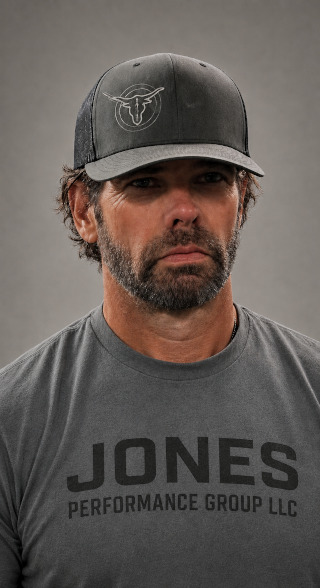
Doug Jones, founder of Jones Performance Group.
"I have a robust AI network which I use for many things. While I have these AI assistants, and consider myself above average in AI use/knowledge, I am not a computer engineer, but do use AI for code building etc. Backstory - I have previously set up an AI running training and planning project (Within Claude) - I have been using this for about 12 months or so and have linked my other AI projects that relate to running (Medical, which is past injuries and surgeries and general medical), Nutrition and supplements (I have a very regimented diet) and consistent supplements I take daily. So the context of my running training and planning project within Claude is quite expansive and the LLM has deep context on me individually.
This project started out as pretty much a log of my training activities. It was pretty elementary at first with the only data being the metrics I inputted daily such as distance ran, time, terrain etc. Then a few months later, I purchased a Garmin Forerunner 970 smart watch. This seemed incredible to me as the watch now recorded the data metrics when I ran or did any physical activity. I pretty much just used Garmin Connect to obtain the metrics, then I was manually inputting the values into Claude (verbally reading the connect screen for the data straight into Claude). Then after a few weeks I was able to have Claude compare and contrast my data and give me forecasts and positives and negatives with respect to my running training. It was with this analyzed data that I came up with my first version of my running training plan, using the data I collected from Connect and the synthesis of this data via Claude.
I knew there had to be a better way to bridge the Garmin Connect data and Claude AI so this is where I started to research how to make this happen. It was in May of this year that, through that process, I came across Tredict. I found that by incorporating the Tredict MCP through Claude, I could link Tredict to be the bridge. At first, I was still Connect focused, meaning that I was concerned with the data which was housed in Connect, and really thinking that Tredict was just the bridge that allowed me to pull the connect data, and get it into my Claude AI.
Note-taking in Tredict via Claude, at the gym
Within a short time, I discovered that I could write notes in Tredict. These were notes for specific activities, not tied to my training plan in Claude. This was the start, but not full grasp, of the major lightbulb for me. I had a training plan in Claude, the data from Connect in Claude and verbal notes I was directly inputting into Claude (via either typing them into Claude, or verbally putting into a Claude chat that correlated to a specific training session/event) and now I had a second set of notes that was living in Tredict marked by date and the activity. I typically would do these note entries when I returned home from the gym/run into my laptop and into Claude and sometimes Tredict. I was focused on getting the notes to sync with the training plan in Claude, so at the beginning I was not focused on the Tredict notes, just using those notes as a copy/paste to then put them into Claude to align with the training plan. It was at this time that I started to play around more with Tredict as I was trying to push my Claude training plan from Claude to Tredict. I was successful at getting my plan into Tredict but in all honesty did not fully understand the complexities of Tredict. Then one day it clicked by accident. I was at the gym, pressed for time and had to get to work to start an operation. I knew I would not have time at work to input my notes (it is important for me to get the notes into the system soon after I do the training as some of the detail, pacing, soreness etc will be forgotten if I wait too long) so... I used my phone at the gym while standing on the treadmill, still dripping sweat. I opened my Claude AI app on the phone, got to my Running and Training project folder, and clicked the voice to text button. I gave Claude the notes and Claude came back and asked if I wanted to push the notes to Tredict. I said that was fine (I really wanted the notes to go to Claude solely, but figured if they go to Tredict, that's fine and I can access them later and move around as I want). I later discovered the notes imported into Tredict, into the training plan (within Tredict) that I pushed/created in Claude. I had an epiphany, why don't I just use the training plan in Tredict and use Claude as the bridge to bring in the info. I can also take the Tredict info and have Claude analyze it anytime.
Rarely in Garmin Connect now, just Tredict
I do understand now that Connect is where the data comes from, I just allow it to live in Tredict and do all my work from there. Instead of trying to take the data and put it somewhere else like Claude, it's housed in Tredict ( I rarely go into Connect anymore) - Claude does get data that I request when I ask it to do a certain task like analyze a month's worth of runs or the side notes that are not tracked in Connect / Tredict like feelings, injuries etc.
The printed study guide that became my Tredict bible
So I set off on a Tredict deep dive, trying to learn everything about Tredict that I could. I had AI create a Tredict Brief to get a quick understanding of Tredict - I have since adapted this into my personal study guide for learning the features and benefits of Tredict (this is where I discovered the real value of Tredict and prompted my initial content of the letter I wrote you). This study guide is printed out and has handwritten notes all over it. It's my bible with respect to Tredict. No offense, but I do still want to print out your directions and compare and contrast them to my study guide. I just know that as an athlete, and my learning style, how I have to study and learn a new platform.
I am still learning, Tredict can be complex in the beginning, but that is what also gives it extreme value - all the metrics and data values. I now have a better understanding and I am using it everyday. Once I finish my 50-mile race in October, I will be redoing my training plan and will set things up with more Tredict values in place for daily analysis and comparisons. I am approaching the final month of my training cycle before my taper so I am full speed ahead right now. I am just very fortunate that I have hours at my normal job to spend on outside endeavors (like this one). I am fortunate that I found Tredict, initially as a tool to complete the AI integration package, and now as a repository for all my data that seamlessly integrates with various AI platforms."
Thank you so much, Doug, and every success with JPG!
Doug can be reached at doug@jonesperformancegroup.org.
P.S. Doug mentions his printed study guide. If you prefer learning Tredict on paper too: the Tredict Manual as PDF is available here.